Finch West is a 3.5B streetcar, & how do we fix it
As of today, it's very commonly known that Finch West "LRT", delayed & over budget, ran worse than the buses it was supposed to replace. Somehow fortunately, the service is so, so bad it made transit signal priority finally a news & political item, something people asked for decades for streetcars / St Clair / King Street pilot / Scarborough / Dufferin / RapidTO bus lanes but were always brushed away, until now.
But as of today (2025 Dec 12), the line 6 still run slow AF, & any improvement is still on proposal / "coming soon" stage. Some of them might have died already, but we'll never know given everything is so opaque. So here's some of my observations & ideas on how to speed it up.
How bad is the service right now?
I've recorded some data on 1st day of operation, with some other buses for reference.
I've also given line 6 some mercy, not counting the 10 minute "short turn'd till next train" in the stats.
Finch West LRT
Average speed: 11.8km/h
Moving speed (not counting any stop time, red lights or actual station stop): 21.1km/h
Finch Express bus (939B)
Measured from Scarborough Town Center to Finch West, so no speed boost from Scarborough bus lanes is counted.
Average speed: 23.6km/h
Moving speed: 33.0km/h
Finch bus (36)
Measured from finch west to finch.
Average speed: 17.3km/h
Moving speed: 25.0km/h
So far the results is simply unacceptable, & as most running groups around the city pointed out, quite beatable. We've even witnessed a parallel running replacement bus, overpassing us half way in the ride, & finished 2 stops ahead of us.
The issues
Some of them are pretty obvious, & quite well known now, but for completeness I'll list them too.
Red lights galore
The streetcar almost stopped at all lights, waiting for the entire signal cycle to end, THEN enter the station afterwards.
Dumbed down speed
Videos from test runs have shown it was capable of running in higher speed, but TTC decided on a slower speed. Speaking of;
Unrealistically low target
In multiple interviews, TTC stated the horribly slow speed is their expected speed*. There's no improvement when your target is this low.
* Somehow they also said, sometimes in the same interview, they expect it to go 10 minutes faster than this. Aside the logic defying expectations, even then, it'd still be slower than 36 Finch bus.
Now let's set some realistic targets.
What Finch West deserves to get
In metrolinx's promotional material, they promised a 34 minutes travel time, which translates to ~20km/h average speed.
I believe this is still way too slow, we should at least achieve express bus speed or better, which means 24km/h, or ~25 minutes of travel time.
Yes, my lowest expectation is half the current travel time.
Now let's talk how do we get there.
What should we do about Finch West
1. Complete, total, no-questions-asked transit signal priority
From my research, there's been a telephone game going on between TTC & the city of Toronto, where someone said "we want priority", the other reply "done", but either did the weakest possible thing, or just thrown out the proposal cause 1 car driver in the neighborhood don't want to wait 5s for a public transit vehicle with hundreds of people on it.
So to put it clearly:
The LRT should ALWAYS get the green lights when it approach a traffic light. No questions asked.
Not just when it's running late. Not just extending the green for a tiny bit. Always. No exceptions.
In more technical terms, that includes:
No slow down due to non-LRT conditions. No slow down due to cars/people crossing the road.
If you can't control the drivers, either ticket them or put in gates.
If you're worried about cars / people entering strictly LRT only portions of the track:
A. Maybe you should've thought about this 15 years ago & build it on a bridge / in a tunnel
B. Fences. Loads of fences. It's not a shameful thing to do either; Hong Kong also learnt it the hard way, & had to put in the fences after soft opening
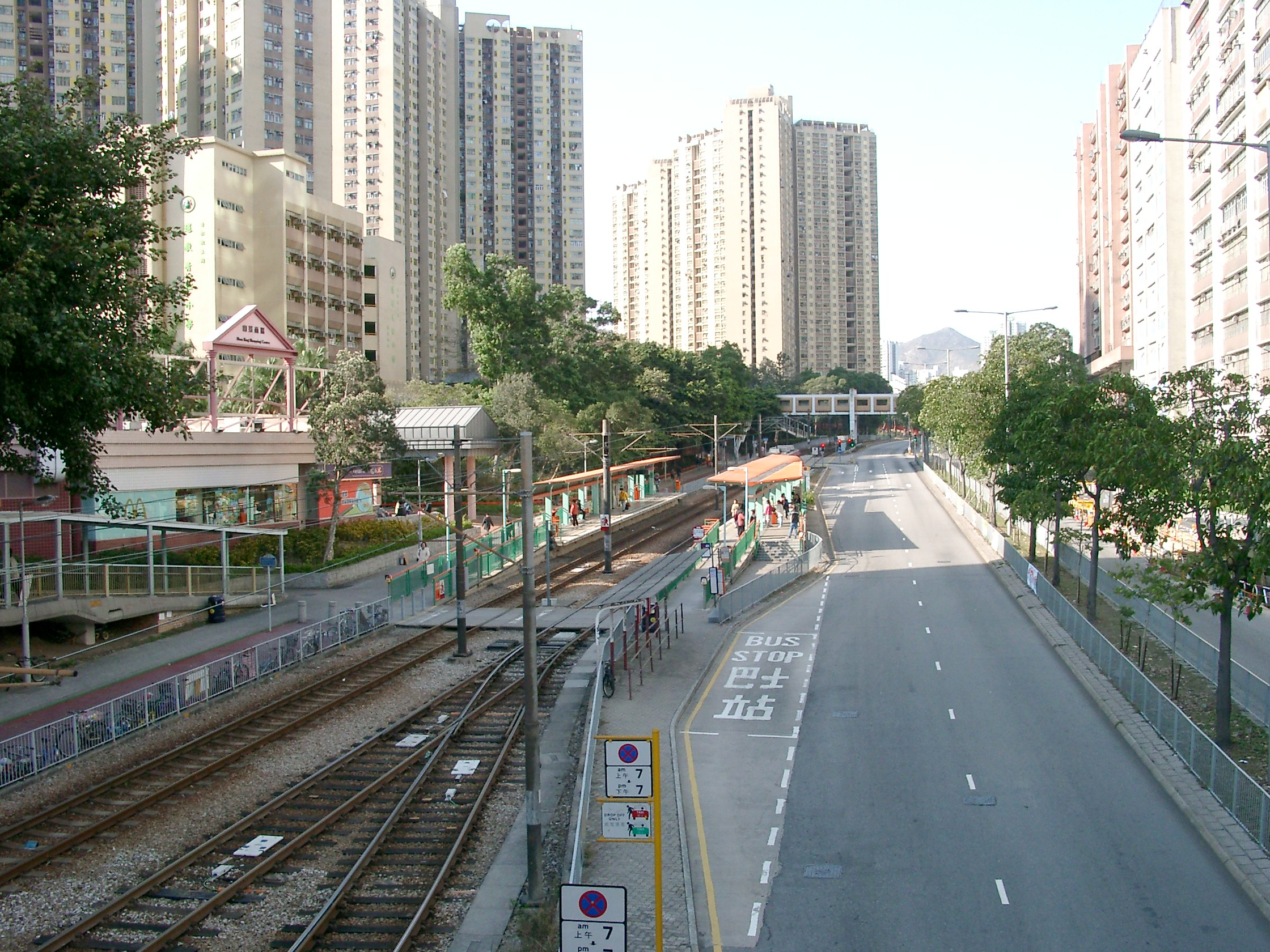

The only permissible slow downs would be track conditions or entering / leaving stations. Even those should be minimized (more in a bit)
LRT should be able to get the green at ANY part of traffic light cycle.
If the pedestrians are crossing when LRT is approaching, LRT will get the next light. If cars were turning, they'll get the red & LRT will get the green. No waiting for an entire cycle.
In fact, pedestrians / LRT crossings should be redesigned so that they are always able to wait for the LRT to pass.
Some of that already exist on fright rail / GO train crossings, so this is not even that foreign.
& to make things easier, plenty of finch west stations have their platforms set after the lights. While being doubly annoying right now, it's actually easier to manage the priority lights, cause you'd know the train is needing the green from a distance.
2. Request stops
1 interesting thing I've noticed, & have yet to see anyone report on it, is that the Finch West LRT isn't doing too bad on moving time: Even at avg 21.1km/h moving speed (still pretty bad), that'd give you just about 30 minutes of total traveling time.
We can't cut all stops on the line of course, but we can cut almost every stop that's not the terminal, or connecting to other transit options on major intersections. (Which is to say, normal express bus stop distances; but even those are getting reviews so we might be able to cut even more).
But what about all the poured concretes?! Well:
A. Maybe you should've planned better, &
B. Let's talk about request stops.
For some reason, request stops only exist on Toronto's buses, but never on streetcars & LRTs. This might also be the reason why the 36 buses / line 6 replacement buses consistently out performing the LRTs: among other things, they get to skip stops that are not necessary the the current batch of passengers.
But for clarity, & for the city councilors & TTC decision makers who have never taken a bus ride in their life, here's what it means:
1. By default, you don't stop on most stops
2. You CAN stop at the stops, when:
2a. Someone on the vehicle press the "STOP" button, or
2b. The driver spotted / knows someone will get on the bus at the stop.
In a very advanced, built-for-2025, 3.5B in the making LRT system, the driver should be able to see info like these from their dashboard, before they're within line of sight of the stations.
I also understand the TTC has an entirely different thing, that's also called Request Stops (see https://www.ttc.ca/accessibility/Easier-access-on-the-TTC/Riding-the-Bus). But I'm talking normal English here, not Torontonian legalspeak. See the normal definition on Wikipedia:
Or see how it works in the UK (video by @geofftech.bsky.social):
In fact, ALL streetcars & LRTs are already equipped with the door opening buttons.
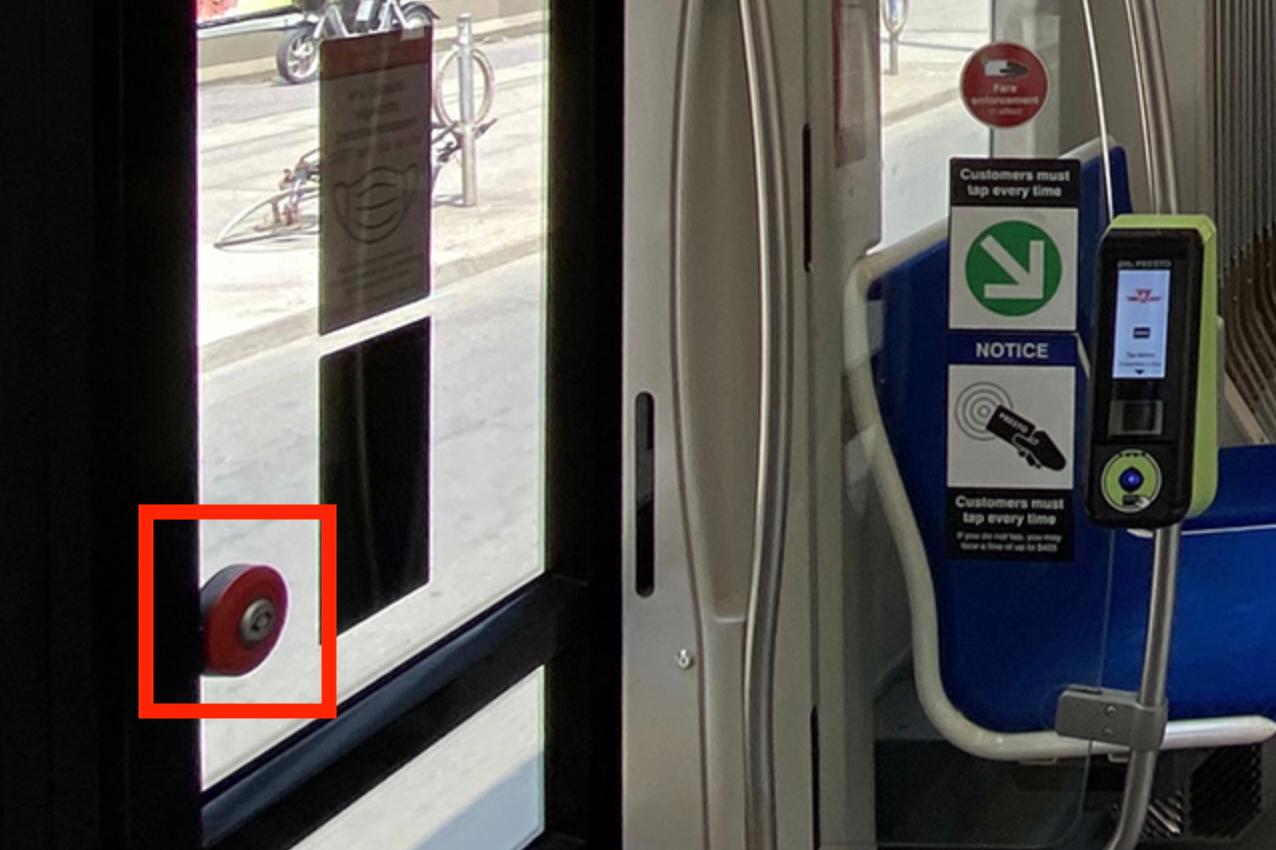

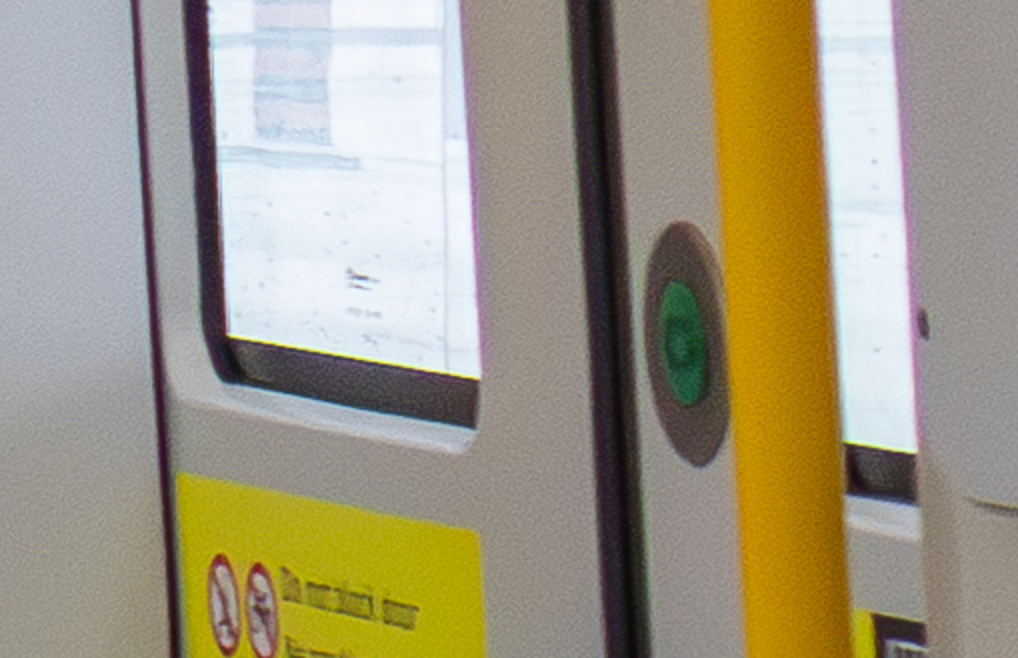
.jpg)
Here, I'm using the most available image I can find, that shows line 6 & its connecting bus routes (from a 2023 annual report, nowhere to be found on TTC's site).

Modified from https://stevemunro.ca/2022/10/25/ttc-2023-annual-service-plan-round-2/#line-6-changes, thanks to Steve Munro (@swanboatsteve.bsky.social) for the capture.
For this iteration, I'm only keeping stops with express bus services as required stops. Which means ALL stops are request stops except for the following:
Humber College
Martin Grove
Mount Olive
Rowntree Mills
Emery
"Jane & Finch" station
Finch West
Yes, 5 stops between the terminals, the rest by request.
These stations MIGHT deserve to be always stopping since they have an express bus connection and/or are the terminals. But if they're not well used by passengers, we can always take them off the always stopping list. Same goes to the request stops, we can easily track which station have been requested on more trips than most, & adjust to people's travel patterns.
But what if request stops doesn't work?!
There is a remote possibility that all request stops will be requested on every single stop, basically running like now. For that:
1. Any skipped stop on any trip is time saved for hundreds of people, so still worth it. &
2. Let's talk about the elusive Express Streetcar service.
3. Express streetcars (yes it's possible!)
This year, Hiroshima, Japan opened a new streetcar connection to their Shinkansen station. Besides bangers like straighten up the lines, grade separation with bridges, new retails & restaurants in & around the station etc., they have also introduced Rapid Streetcars without extra tracks.
To put it simply:
This is a rush hour service only, & only available for weekdays.
The skipped stations will still get served by "normal" streetcars.
Because the entire thing is planned ahead, no bunching or "express stuck behind local streetcar" situation happened.
TTC already got a definition of peak hours already, so we don't even need to reinvent it here.
During peak periods Monday to Friday 6:30 a.m. to 10 a.m. and 3:30 p.m. to 7 p.m.
4. Run the LRTs as quick as it can be
With less red lights & stops, the LRT will now have ample opportunity to speed up to the fabled 60km/h operational speed. Even if you can't do all the improvements above, speeding up is still a very achievable goal, as the LRTs were tested in a significantly higher speed than TTC ran it, as reported by Transitthinker & others: (video by @transitthinker.bsky.social)
Conclusion
Just to recap:
1. Complete, total, no-questions-asked transit signal priority
2. Bus style request stops for LRT
3. Express streetcars at weekday peak times
4. Speed up the LRTs
All rules apply to Eglinton LRT too, especially to the surface level regions. Express streetcars might not mean much when TTC streetcar has a deranged situation with its track, both technical & managerial: (video by @notsmoothsteve.bsky.social)
But you won't know it unless you try. And just put some capital money towards migrating the switches to normal international standards. (Yes it should count as a capital project, like Bloor station upgrade. Go score some funding.)
It has been very frustrating to write this article, not because it's so bad, but because it takes so little effort to make it good, and yet no one did.
Here's hoping the 3.5B price tag can shook the city enough to do the right thing. We, the passengers, will be counting on it.
PS. I'll start doing more writing like this. Probably not too frequent (am bad at writing), but if you're interested, you can follow with BlueSky, RSS, or email list.