Westgate wander

Beginning from Town Hall, we'll catch the 109 tram on Collins down to the bay...

Port Melbourne railway line

Opened in 1854, the first in Australia to operate with steam locomotives (previously horse-drawn, incline)

Sydney got its first steam line the following year between the city and Granville

Port Melbourne railway line

Opened in 1854, the first in Australia to operate with steam locomotives (previously horse-drawn, incline)

Sydney got its first steam line the following year between the city and Granville

Port Melbourne railway line
The Port Melbourne railway line is a former heavy rail line in Melbourne, Australia, opened in September 1854, that is now a light rail line. Named the Melbourne and Hobson's Bay Railway at the outset, it was instigated by the Melbourne and Hobson's Bay Railway Company to carry passengers arriving in Victoria at Station Pier and to alleviate the high cost of shipping goods using small vessels up the Yarra River to Melbourne. The line's conversion to light rail occurred in 1987; it is now served by tram route 109.
https://en.wikipedia.org/wiki/Port_Melbourne_railway_line

From there we'll walk west along the promenade, passing Pluto and onwards beyond the Solar System to the Life Saving Victoria headquarters... (which has a cafe if a snack/coffee is needed)

The last shack of Fishermans Bend

Fishermen began settling 'Humbug Reach' and 'Fishermen's Bend' along the lower Yarra River in the 1850s.

Thirty families lived on the 'Bend', frequently finding additional work in the docks and cargo ships and loading ballast for ships returning to Europe.

The last shack of Fishermans Bend

Fishermen began settling 'Humbug Reach' and 'Fishermen's Bend' along the lower Yarra River in the 1850s.

Thirty families lived on the 'Bend', frequently finding additional work in the docks and cargo ships and loading ballast for ships returning to Europe.

Habitation was in rough shacks along the Bend, made from corrugated iron, flattened kerosene tins or wood. There were no roads, shops, or sewerage. Water was collected from hanging out sail canvases, and stored in iron tanks or casks. Milk came from a nearby farm.

The last remaining shack on the Bend was demolished in 1970, as Webb Dock expanded; the Life Saving Victoria headquarters stand on the site today.

Fishermans Bend
Fishermans Bend is a precinct within the City of Port Phillip and the City of Melbourne. It is located on the south of the Yarra River in the suburb of Port Melbourne and opposite Coode Island, close to the Melbourne central business district. Fishermans Bend originally included the area now known as Garden City, which was renamed in 1929.
https://en.wikipedia.org/wiki/Fishermans_Bend

...and south to Sandridge Lookout, where we can watch cargo ships come in and unload at the container terminal.

Ships and cranes

Consult the MarineTraffic app.

Get to know the types of ships:

Ships and cranes

Consult the MarineTraffic app.

Get to know the types of ships:

Ship spotting - Port of Melbourne
Ship spotting Many different types of ship can be seen on Port Phillip Bay and each is designed to carry specific cargo. There are around 3200 commercial ship visits to the Port of Melbourne each year. There are several vantage points to watch the ships come to and from the port. Popular spotting sites include...
https://www.portofmelbourne.com/community-education/visiting-the-port/ship-spotting/

(RIP Infrastructure Observatory, who published The Container Guide.)

The container unloading is highly automated:

Our Technology » Victoria International Container Terminal
VICT’s development delivers a leading global standard in modern container terminal design, innovation and operations, using best-proven technologies to deliver automated operations for both landside and shipside. Our technology brings the equipment to life, ensuring it all runs smoothly.
https://www.vict.com.au/about-us/our-technology/

The 7 Ship-to-Shore cranes are operated remotely, 1.2 kilometres from the wharf via fiber optic cable.

The cranes can withstand winds up to 25m/s or 90kph and can lift loads up to 65 tons. 


There are 26 Automatic Stacking Cranes, 100 percent automated.


Then back north to the park...

Westgate Park

Has a lake that occasionally turns pink due to algae blooms.

Flora and fauna:

Westgate Park

Has a lake that occasionally turns pink due to algae blooms.

Flora and fauna:

The Birrarung, wetlands, saltmarsh, woodlands and more to explore - Westgate Biodiversity: Bili Nursery & Landcare
Westgate Park is 40 hectares
https://westgatebiodiversity.org.au/our-history/

Keeping on along the Bay Trail, looping around the industrial area.

Just north, on the opposite bank of the Yarra, there used to be a swamp...

The swamp and its inhabitants
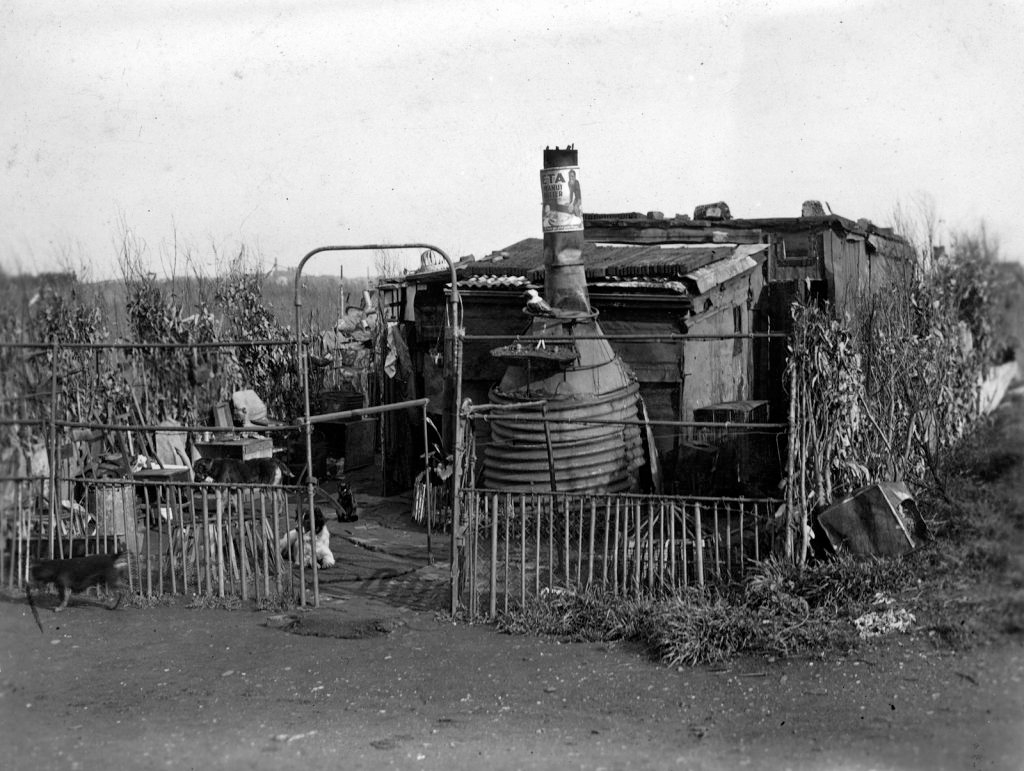
The front view of a "Dudley Mansion."


The swamp and its inhabitants

The front view of a "Dudley Mansion."


Magic soap and ‘Wild West’ riding: the ingenious residents of Dudley Flats
Dudley Flats was a slum that emerged on the West Melbourne swamp during the early years of the Great Depression. Residents of the Flats were known for their resourcefulness, fashioning makeshift house
https://blogs.slv.vic.gov.au/our-stories/slums-of-melbourne-dudley-flats/
West Melbourne Swamp
The West Melbourne Swamp also known as Batman's Swamp, was a large saltwater wetland located to the west of the city of Melbourne, Victoria. It was an important resource for Aboriginal people.
https://en.wikipedia.org/wiki/West_Melbourne_Swamp

Then, a highlight: we'll take the Westgate punt, which costs $5 and runs on demand on the weekends. This will take us under the bridge itself.

Walk to Yarraville for lunch via Maribyrnong River Trail, Stony Creek and Ballarat St (2.3 km)